Arborist Battle Ground WA for Professional Tree Assessments and Care
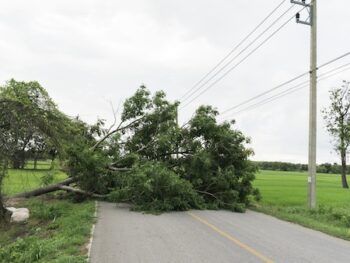
Arbor City Tree Care provides professional Tree Service through ISA-certified arborists in Battle Ground, WA, helping homeowners and commercial property owners understand what their trees need before deciding on pruning, treatment, support, or removal. Trees can show problems in subtle ways—a thinning canopy, dead branches, cracked bark, unusual fungi, exposed roots, or changes in surrounding soil—and those symptoms do not always point to the same solution. A professional arborist evaluates the tree as a living system rather than focusing only on the most visible branch or trunk problem.
Arbor City Tree Care’s arborists are trained in arboriculture and follow International Society of Arboriculture standards and ethics in their tree-care work. The company provides inspections, Tree Pruning, tree removal, structural support options, land clearing, and 24-hour emergency assistance throughout Battle Ground and surrounding Southwest Washington.
The first question should not always be, “How much will it cost to cut this tree?”
Sometimes the more useful question is:
“What is happening to this tree, and what should we do about it?”
What an Arborist Looks at Beyond the Visible Branches
A tree problem is not always located where the symptoms appear.
Branches may decline because of a canopy issue, but changes below ground can also influence tree condition. Root disturbance, soil conditions, disease, previous damage, and environmental stress can all affect what happens overhead.
Arbor City Tree Care states that its inspection process can examine soil and root protection and look for signs of potential disease before maintenance begins. If concerns are identified, its arborists can discuss treatment plans and possible solutions.
An arborist assessment may consider:
- Dead, damaged, or declining branches
- Changes in canopy density
- Cracks or cavities in the trunk
- Root-zone disturbance
- Soil movement around the base
- Fungal growth or other unusual symptoms
- Crossing or poorly positioned branches
- Previous pruning and resulting structure
- Proximity to homes, roads, utilities, and pedestrian areas
- Recent storm damage
- How the tree’s condition affects the surrounding property
No single symptom automatically determines the recommendation.
A cavity does not automatically mean removal.
Dead branches do not automatically mean the whole tree is dead.
And a large tree is not automatically a dangerous tree simply because of its size.
Professional assessment helps separate visible concerns from assumptions.
When Battle Ground Property Owners Should Consider an Arborist Assessment
Some situations clearly require tree work. Others call for investigation first.
When a Healthy-Looking Tree Starts Changing
Trees do not have to fall over before they show signs of trouble.
A homeowner might notice that one side of a canopy is thinning. Branch tips may begin dying back. Leaves can appear different from previous seasons, or fungi may develop near the trunk.
These changes deserve context.
The tree’s species, age, site conditions, roots, surrounding construction, and recent weather can all matter.
An ISA-certified arborist can examine those factors before recommending a maintenance plan.
Sometimes selective pruning is appropriate.
Sometimes monitoring makes more sense.
Other conditions may warrant structural support or additional action.
The advantage of starting with diagnosis is that the service can follow the problem instead of trying to make every problem fit the same service.
When You’re Worried About a Large Tree Near the House
Large mature trees often create understandable concern when they stand close to homes, garages, driveways, businesses, or neighboring private property.
Size alone, however, tells you very little about actual tree condition.
An arborist can look for specific concerns such as damaged limbs, structural defects, trunk changes, root disturbance, or storm-related damage.
Location also affects how concerns should be prioritized.
A compromised branch above an unused corner of a property is different from one extending over a front entrance, parking area, patio, or regularly occupied part of a home.
Arbor City Tree Care specializes in close-quarter tree work around buildings and other property features, allowing an assessment to lead into professional pruning or removal when necessary.
When You’re Planning Construction or Property Changes
Trees and construction can affect each other long before a chainsaw is involved.
A planned home addition, driveway, commercial improvement, or other project may place excavation, equipment, or new structures near established trees.
If trees are intended to remain, their root zones and surrounding conditions deserve consideration during planning.
If trees genuinely conflict with the project, Tree Removal or Land Clearing may become part of the site-preparation process.
Arbor City Tree Care provides both individual tree removal and land clearing, including work in tighter spaces where preserving surrounding property is important.
An arborist assessment before construction can help distinguish between trees that can reasonably remain and those that conflict with the property’s future use.
Sometimes the Arborist’s Recommendation Is to Prune, Not Remove
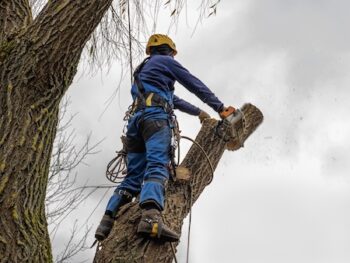
One of the most useful outcomes of an assessment can be determining that the whole tree does not need to come down.
A localized branch problem may be manageable through professional Tree Trimming.
Arbor City Tree Care provides pruning, thinning, safety pruning, and general tree and shrub maintenance in Battle Ground. Its arborists use professional tree-care practices when determining what portions of a tree should be removed.
Pruning may be considered for:
Deadwood: Removing dead or declining branches, particularly where they are positioned above frequently used areas.
Structural development: Addressing crossing, competing, or poorly positioned branches before they become substantially larger.
Clearance: Managing branches conflicting with roofs, driveways, sidewalks, or other property features.
Storm correction: Removing broken or compromised limbs after weather damage when the rest of the tree can reasonably remain.
Canopy management: Selectively addressing growth without unnecessarily stripping healthy branches.
The important distinction is that pruning should have an objective.
Professional tree care standards do not mean removing as much material as possible. They mean choosing cuts based on what the tree and property actually require.
Structural Support Can Be an Option for Some Trees
Tree care is not limited to pruning versus removal.
Arbor City Tree Care also provides tree cabling and bracing as part of its tree inspection and safety services. The company identifies these options, along with lightning protection systems, among potential solutions following an assessment.
These techniques are not appropriate for every structural concern.
They require professional evaluation because the location and nature of the weakness determine whether additional support is reasonable.
That is another reason an arborist page should not read like a generic trimming page.
The objective is to evaluate the tree and consider the available management options.
For one tree, that may mean pruning.
For another, support and monitoring may be considered.
For a substantially compromised tree, removal could still be the appropriate recommendation.
Battle Ground Street Trees Require Property Owners to Think Beyond Their Property Line
Tree condition is only part of the decision. Location matters too.
The City of Battle Ground explains that property owners are responsible for maintaining many planter strips adjoining their properties. However, trees in planter strips cannot simply be removed like ordinary backyard trees. A Right-of-Way Permit from the City’s Engineering Division is required before planter-strip tree removal.
The City currently limits planter-strip tree removal to circumstances including trees that are:
- Dead
- Interfering with underground or overhead utilities
- Impeding sight distance
- Capable of harming public life, health, or safety
When removal is approved, replacement with a tree from the City’s approved list may also be required unless the permit says otherwise.
This is an excellent example of why professional evaluation can matter.
A property owner may see an inconvenient tree.
The City may need documentation or circumstances supporting why removal is appropriate.
And an arborist may determine that pruning can solve the actual problem without removal.
City of Battle Ground Planter Strip and Tree Requirements
Arborist Guidance for Trees Along Battle Ground Streets and Sidewalks
Battle Ground also has practical vegetation-clearance requirements.
The City currently asks residents to maintain low-hanging branches with approximately 14 feet of vertical clearance from the top of the curb and 8 feet across the full width of sidewalks for pedestrian access.
Vegetation originating from private property cannot overrun public rights-of-way in ways that create accessibility, safety, or other property-maintenance problems.
Creating that clearance does not mean indiscriminately removing every lower limb.
An arborist can consider how the required space can be created while maintaining reasonable tree structure.
Battle Ground also requires a permit when work itself takes place within the public right-of-way, including tree removal. The City’s Engineering Division can help property owners determine where the right-of-way boundary falls when its location is unclear.
That can be particularly useful for trees near Main Street, Parkway Avenue, Eaton Boulevard, Rasmussen Boulevard, and other developed corridors where trees and public infrastructure share limited space.
After a Storm, Evaluate What Remains Standing
Storm damage can make tree-care decisions feel obvious when they are not.
A large limb on the ground attracts attention.
An arborist also looks at what remains above it.
Did the failure expose another weak branch?
Was the trunk affected?
Did the root plate move?
Is damaged material still suspended in the canopy?
Has enough viable structure remained to consider corrective pruning?
Arbor City Tree Care offers 24-hour arborist and emergency tree services in Battle Ground and has experience handling downed trees, hanging debris, and hazardous trees around homes and businesses. The company also states that it coordinates with power companies when trees are entangled with electrical equipment.
If a tree contacts electrical equipment, stay away and contact the appropriate utility or emergency authority rather than approaching it yourself.
A storm-damaged tree does not automatically require emergency tree removal.
But a partially uprooted tree, significant trunk failure, or unstable material over an occupied area deserves prompt professional attention.
ISA-Certified Tree Expertise for Battle Ground Properties
Arbor City Tree Care provides residential and commercial tree care throughout Battle Ground and surrounding Southwest Washington. Its local tree-service information identifies its arborists as certified and trained across tree maintenance and removal, while its Battle Ground arborist page specifically describes its team as ISA certified. The company also states that it is licensed, bonded, and insured.
That broader capability allows an inspection to lead naturally to whatever comes next.
The recommendation might be Tree Pruning.
A larger property could require Land Clearing.
A declining tree may eventually require removal followed by stump grinding or Stump Removal.
Or the arborist may recommend monitoring and no immediate major work.
That’s valuable information too.
Schedule a tree assessment with Arbor City Tree Care when you need a professional arborist for your Battle Ground home, business, or commercial property.
Make the Tree-Care Decision Before Making the Cut
An arborist’s value is not measured by how many branches come down.
It is measured by the quality of the decisions that come first.
A tree may need deadwood removed.
Another might benefit from structural pruning.
A tree beside a building could need clearance without losing the rest of its healthy canopy.
A storm-damaged tree may need immediate stabilization and then a second decision about its future.
And sometimes an assessment confirms that removal really is the responsible next step.
Arbor City Tree Care provides Arborist Battle Ground WA services backed by ISA-certified tree-care expertise, inspections, close-quarter work, Tree Trimming, Tree Removal, structural support options, Land Clearing, and 24-hour emergency assistance.
Contact Arbor City Tree Care to request an assessment from an arborist serving Battle Ground, WA and determine what your tree actually needs before deciding what gets cut.
Arborist FAQs for Battle Ground, Washington
Arbor Tree Care Offers Emergency Tree Removal in the Following Locations
Camas | Battle Ground | Salmon Creek