Tree Removal Camas WA for Difficult Trees and Changing Properties
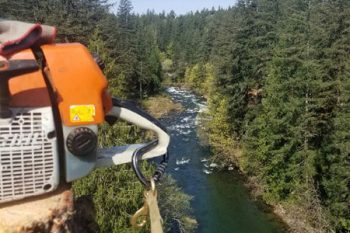
Arbor City Tree Care provides professional Tree Service and Tree Removal in Camas, WA for homeowners and commercial property owners dealing with dead trees, structural damage, construction conflicts, crowded lots, and trees that no longer work safely with the property around them. Camas presents an interesting tree-care environment: mature Pacific Northwest vegetation sits alongside established neighborhoods and continuing development, while local regulations can affect trees in critical areas, shorelines, larger subdividable properties, and public rights-of-way.
Removing a tree permanently changes the property, so the decision deserves more than a quick look at the canopy.
Arbor City Tree Care’s certified arborists can evaluate tree condition, soil and root concerns, surrounding structures, and signs of disease before recommending a solution. The company also specializes in close-quarter removals where trees stand near houses, landscaping, fences, or other obstacles.
Sometimes the recommendation is removal.
Sometimes Tree Pruning or another maintenance approach can keep the tree in place.
The important part is knowing the difference.
When Keeping the Tree Stops Making Sense
A large tree is not automatically a dangerous tree.
Likewise, a tree does not necessarily need removal because one branch died or the canopy has grown close to a structure.
Removal becomes a more serious consideration when the condition or location of the tree creates a problem that cannot reasonably be managed through routine tree care.
That can include:
- A dead or substantially declining tree
- Major trunk or structural damage
- Significant storm failure
- Root or soil movement around the base
- A tree interfering with planned construction
- A tree whose location creates an ongoing property conflict
- Trees that must be cleared for an approved site project
- Damage that leaves too little viable structure to retain the tree
Signs such as cavities, cracked bark, fungal growth, and disturbed soil around the base deserve professional evaluation rather than an automatic diagnosis from the ground.
Arbor City Tree Care’s tree specialists can inspect the condition and discuss potential treatment or removal options before work begins.
Camas Tree Removal Projects Rarely Look the Same
The reason for removing the tree influences everything that follows—from equipment and access to whether stump grinding should be included.
Removing a Tree From a Tight Residential Property
Consider a mature tree standing behind a Camas home with a fence on one side, landscaping underneath it, and very little open ground around the trunk.
There may be no practical space to simply fell the entire tree.
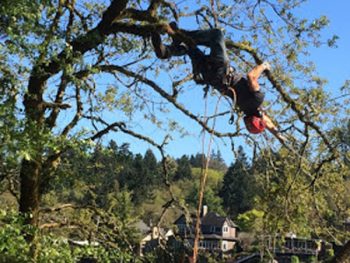
Instead, tree workers may need to dismantle it progressively, controlling branches and trunk sections as the removal proceeds.
This is an area Arbor City Tree Care specifically emphasizes. The company specializes in close-quarter removal and land-clearing work designed to minimize unnecessary impact on surrounding property.
Planning can account for the house, driveway, neighboring private property, landscaping, access routes, and where wood and brush can be processed.
The smaller the available work zone, the more important the removal sequence becomes.
Removing Trees for Construction or Property Improvements
Camas properties change.
Home additions, accessory structures, driveways, commercial improvements, and larger development projects can create conflicts with existing trees.
This is where tree removal becomes part of a broader property plan rather than an isolated service.
Before cutting, determine whether the tree actually conflicts with the project and whether local tree-preservation requirements apply.
For projects involving multiple trees or larger site preparation, Land Clearing may make more sense than scheduling individual removals independently. Arbor City Tree Care provides land-clearing services and specifically works in narrower areas where indiscriminate heavy-equipment clearing could cause unnecessary property disturbance.
The intended use of the cleared area also affects what happens afterward.
A stump located where a new driveway or structure is planned creates a different issue from one in a landscape area. Stump Removal or grinding can therefore be incorporated according to the next use of the site.
Removing a Tree After Unexpected Failure
A wind event can turn a planned tree-care decision into an urgent one.
A tree may partially uproot, split, drop a major leader, or fall across a driveway.
In these situations, emergency tree removal may be necessary to address immediate hazards or restore access.
Arbor City Tree Care offers 24-hour emergency tree service and can evaluate downed or damaged trees throughout Camas and surrounding Southwest Washington.
The fact that one portion failed does not automatically mean everything remaining must come down.
Once immediate hazards are controlled, an arborist can evaluate whether the remaining structure can reasonably be retained.
Camas Has Tree Removal Rules Worth Checking Before You Schedule the Crew
This is one of the most important distinctions between the Camas and Vancouver pages.
Camas has its own tree-removal requirements.
For an ordinary private tree, the City currently says a removal permit is not required when the property is outside a critical area and cannot be further divided. Properties involving critical areas, shorelines, or certain larger/dividable lots can require additional consideration. The City specifically advises property owners to contact its Planning Division to determine whether a property falls within a critical area.
In other words, seeing a tree entirely inside your property line does not by itself answer the permit question.
The property matters too.
This can be particularly relevant around Camas because wetlands, steep slopes, shorelines, and other environmentally sensitive conditions can affect how a site is regulated.
Before removing trees as part of a larger improvement or development project, verify the current requirements rather than assuming ordinary residential-tree rules apply.
City of Camas Tree Removal Guidance
The Tree Between the Sidewalk and Street Is a Different Situation
Street trees deserve their own discussion.
Camas identifies street trees as trees typically located between the sidewalk and street. These trees require approval for removal, and the City’s current guidance says removal may be approved when a tree is diseased, dangerous, or causing damage to sidewalks or streets. The City specifically states that anticipated future damage by itself is not sufficient.
Removing and replacing a street tree requires a tree-removal permit and a General Encroachment Permit.
That means a tree that appears to be part of the front landscaping can involve a very different process from one behind the house.
Before authorizing removal, establish:
Who controls the tree?
Is it in the public right-of-way?
Does the City require approval?
Getting those answers first can prevent a tree-care project from becoming a compliance problem.
Tree Removal Should Follow Professional Tree-Care Decisions
A chainsaw can remove a tree.
It cannot determine whether removal is the right recommendation.
That distinction is why credentials and assessment matter.
Arbor City Tree Care employs ISA-certified arborist expertise and states that its arborists follow the standards and ethics of the International Society of Arboriculture. The company is also licensed, bonded, and insured.
Before maintenance, its team can evaluate soil and root conditions and look for signs of disease. That broader view helps distinguish between trees that should be removed and those that may respond to another form of care.
Alternatives can include:
- Tree Trimming for localized deadwood or clearance problems
- Structural pruning for problematic branches
- Cabling or bracing in appropriate situations
- Continued monitoring
- A longer-term maintenance plan
- Complete removal when retention is no longer practical
Professional tree care standards matter on the removal side as well.
A difficult tree may need to be dismantled section by section. Rigging, equipment placement, debris movement, access, and surrounding structures all need to be considered before cutting begins.
That planning becomes particularly important when a large Camas tree has very little room around it.
Local Tree-Care Experience for Camas Homes and Businesses
Arbor City Tree Care has been operating since 2017 and provides residential and commercial tree services throughout Camas, Vancouver, Battle Ground, and surrounding Clark County communities.
Its Pacific Northwest experience is useful because local tree work is shaped by more than species alone.
Moist soils, seasonal storms, mature conifers, site development, root disturbance, and the relationship between trees and increasingly developed properties can all influence the work.
Camas properties also vary considerably. Tree-service needs around established areas near Downtown Camas may involve tight access and street-tree considerations, while properties farther north toward Lacamas Lake can present different terrain, vegetation, and site conditions.
That is why an estimate should be based on the actual tree and property rather than simply its approximate height.
Contact Arbor City Tree Care to request a tree assessment and free estimate for professional tree removal in Camas, WA.
Remove the Tree With a Plan for What Comes Next
Tree removal is the end of the tree.
It is often the beginning of something else on the property.
Maybe a hazardous tree needs to come down before it fails.
Perhaps removing one tree opens space for an addition.
A commercial property may need clearing before improvements begin.
Or a dead tree may simply need to be removed so the area can be replanted and used again.
Whatever the reason, professional Tree Removal Camas WA should account for more than cutting the trunk. Tree condition, access, nearby structures, debris, the stump, municipal requirements, and the future use of the site all belong in the conversation.
Arbor City Tree Care combines ISA-certified arborist knowledge with close-quarter removal experience and broader tree-care capabilities for residential and commercial properties throughout Camas and Southwest Washington.
Request a free estimate from Arbor City Tree Care for professional tree removal in Camas, WA. Start by assessing the tree, confirm any local requirements, and build the removal plan around your property—not a one-size-fits-all process.