Why Experienced Arborists Think about Physics Before They Ever Start Cutting
A large tree doesn’t fall apart randomly. Every branch carries weight, tension, and directional force long before the first cut is made. During sectional dismantling, arborists must predict exactly how limbs will react once support is removed. One wrong calculation can send thousands of pounds swinging toward roofs, fences, power lines, or workers below. That’s why homeowners seeking tree removal in Vancouver WA services often rely on experienced professionals like Arbor City Tree Care to evaluate canopy load vectors before removal begins.
Professional arborists use canopy load vector analysis to calculate how force travels through branches, trunks, and rigging systems during dismantling. Understanding directional weight shifts can guide limb movement safely, reduce shock loading, and protect surrounding property throughout the removal process.
Canopy load vector analysis helps arborists predict how branches will move once cut during sectional tree dismantling. By evaluating weight distribution, limb tension, pivot points, and gravitational force, professional tree workers can safely lower sections using ropes, rigging systems, and specialized equipment while minimizing safety risks and property damage.
The Hidden Physics Happening Above Your Roofline During Tree Removal
Most property owners see tree removal as controlled cutting. Arborists see something entirely different. They see shifting force, leverage, compression, and movement happening in real time, dozens of feet above the ground.
Every branch acts like a loaded beam. Some limbs pull downward under gravity while others store tension that releases explosively once severed. In mature Maple trees or aging maple tree canopies common throughout Vancouver, WA and Clark County, uneven growth patterns can make this even more unpredictable.
A common “People Also Ask” question is: Why do branches swing so violently during removal?
The answer comes down to vectors. Once a cut is made, stored energy instantly redirects. Without planning, that movement can create dangerous pendulum effects that can damage nearby structures or injure tree workers.
Professional arborists analyze:
- Branch weight distribution
- Directional tension forces
- Pivot points near unions
- Canopy asymmetry
- Environmental factors like wind or storm damage
This process becomes especially important in dense urban forests, where limited drop zones leave little room for error.
5 Dangerous Miscalculations that Turn Tree Removal into Property Damage
Tree removal accidents rarely happen because a saw fails. They happen because force behaves differently than expected once wood fibers release tension.
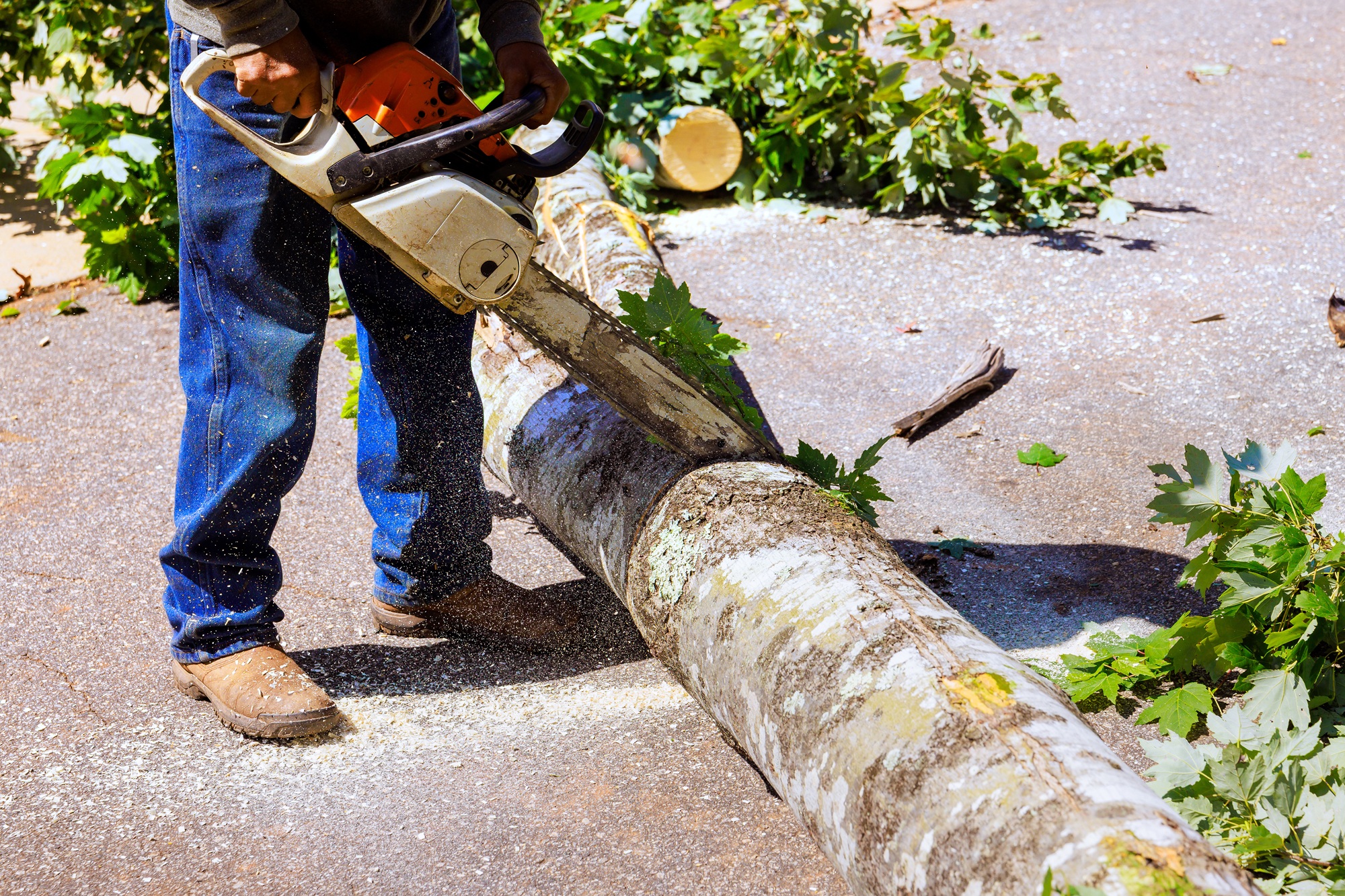
- One common mistake is underestimating branch weight. A limb may look manageable from the ground, yet weigh several hundred pounds. Without proper vector analysis, that branch can accelerate unexpectedly during descent.
- Another issue involves incorrect rigging angles. If ropes don’t account for directional load transfer, branches can swing sideways toward structures instead of lowering vertically.
- Improper tree quartering also creates problems. Cutting large sections unevenly shifts the canopy’s center of gravity, increasing instability higher in the tree. Arbor City Tree Care frequently corrects damage caused by rushed removals, where an imbalance develops mid-project.
- Ignoring environmental pressure is another serious mistake. Wet wood from Pacific Northwest rainstorms behaves differently from dry timber. Wind exposure further alters movement patterns.
- According to the International Society of Arboriculture, improper rigging and uncontrolled limb movement remain major contributors to workplace injuries involving trees. Their safety guidance emphasizes strict adherence to ANSI standards and OSHA regulations during sectional dismantling operations.
Homeowners sometimes assume heavy equipment alone guarantees safety. In reality, safe dismantling depends more on planning than machinery.
Need Professional Tree Removal Help?
Contact Arbor City Tree Care today for expert service.
Why Tree Removal in Vancouver WA Requires Precision Instead of Speed
Fast tree removal often sounds appealing until a limb crashes through a fence or roofline. Arbor City Tree Care approaches dismantling differently because canopy control matters more than speed.
Sectional dismantling protects nearby structures, especially in neighborhoods where houses sit close together. In parts of Vancouver WA, Multnomah County, and Cowlitz County, mature trees frequently grow near driveways, utility access points, and neighboring property lines. Controlled dismantling becomes essential in these confined spaces.
Professional vector analysis also protects tree workers. Arborists evaluate compression zones, bending force, and rotational movement before making cuts. This reduces sudden failures that could injure crews or destabilize rigging systems.
There’s also a financial side that homeowners don’t always consider. Uncontrolled removals increase repair costs, complicate insurance, and increase cleanup expenses. While prices for tree services vary depending on labor, equipment, and material costs, preventive planning usually saves property owners significant money over time.
That’s one reason professional tree removal in Vancouver WA, prioritize hazard assessment before cutting begins.
What Arborists Actually Analyze Before the First Limb Comes Down
Canopy load vector analysis sounds technical, but the process follows practical field logic rooted in experience and physics.
Before dismantling begins, arborists evaluate how the tree naturally distributes weight throughout the canopy. Large horizontal limbs provide leverage, magnifying movement during cutting. Arborists identify which sections carry the greatest stored tension and determine safe release sequences.
They also study surrounding obstacles. Nearby roofs, fences, Heritage Tree restrictions, zoning standards, and utility access all influence the dismantling strategy.
Most professional crews follow several core evaluation steps:
- Determine branch weight and leverage points
- Identify tension and compression zones
- Calculate safe lowering paths
- Evaluate the rigging anchor strength
- Plan controlled descent angles
Specialized equipment plays a major role here. Arborists may use friction devices, pulleys, rigging ropes, wood-chipper services, or heavy equipment, depending on canopy size and location.
In some situations, structural pruning or tree thinning reduces canopy weight gradually before larger removal sections begin. This minimizes dynamic loading throughout the dismantling process.
One Storm-Damaged Maple Changed the Entire Removal Strategy
After a winter storm swept through Clark County, a property owner contacted Arbor City Tree Care regarding a massive maple tree leaning over their garage. At first glance, the removal appeared straightforward. But during inspection, arborists noticed severe asymmetrical loading on the upper canopy.
One side of the tree retained significantly more branch weight after storm damage tore away several major limbs. That imbalance created a dangerous rotational force throughout the trunk.
Instead of removing sections evenly from both sides, arborists adjusted the dismantling sequence entirely. Rigging systems redirected canopy load vectors away from the garage while reducing twisting pressure inside the remaining trunk structure.
The job required slower cuts, careful tree quartering, and precise lowering angles. But the result mattered: no structural damage, no uncontrolled movement, and no emergency escalation.
The practical takeaway was simple. Successful removals often depend less on cutting skill and more on understanding how force travels through living wood.
The Biggest Thing Homeowners Should Understand about Controlled Dismantling
Most dangerous removals don’t start with bad intentions. They start with assumptions.
A branch “looks stable.” A cut “should fall straight.” The limb “probably won’t swing.”
Professional arborists avoid guessing because canopy movement rarely behaves predictably without analysis. Trees are living structures constantly adapting to wind, gravity, moisture, and growth stress. Every cut changes the physics of the remaining structure.
That’s why professional evaluations matter so much in dense landscape environments across Vancouver, WA. Arborists don’t simply remove trees. They manage force, movement, and risk simultaneously.
Reliable tree removal services in Vancouver WA, focus on precision planning long before chainsaws ever touch the canopy.
Why Arbor City Tree Care is the Smart Choice for Controlled Tree Removal
We at Arbor City Tree Care provide the best solutions to our customers. Our team understands that safe tree removal depends on more than just cutting limbs—it requires careful planning, canopy analysis, and precise control at every stage of sectional dismantling.
We take pride in showcasing our excellent tree services, including tree pruning, tree trimming, and professional Tree Removal performed with safety-first methods and industry-approved rigging systems. Our certified arborists evaluate canopy load vectors, structural tension, and surrounding safety concerns so every project is handled responsibly.
From storm damage cleanup to complex removals near structures, we provide dependable solutions tailored to each property owner’s tree needs. Contact Arbor City Tree Care for expert tree services in Vancouver, WA and experience the professionalism, customer service, and attention to detail that define safe tree removal in Vancouver WA.
Need Professional Tree Removal Help?
Contact Arbor City Tree Care today for expert service.