The Damage Beneath the Soil Can Slowly Change a Tree’s Ability to Grow and Stay Anchored
A mature tree can look healthy above ground while its roots struggle beneath compacted soil. Repeated foot traffic, parked vehicles, construction work, and heavy equipment can compact the soil, reducing the space that normally holds air and water. For property owners researching tree service in Vancouver WA, understanding this hidden pressure is an important part of responsible tree care, particularly when established trees grow near driveways, buildings, walkways, and active work areas.
Root zone compaction affects more than the appearance of the ground. It can restrict oxygen movement, reduce water infiltration, limit the growth of fine feeder roots, and make it harder for a tree to absorb nutrients. Over time, these changes may contribute to declining health and, in some circumstances, affect the root system’s ability to anchor the tree.
The outcome depends on the severity and location of compaction, soil conditions, tree species, and the amount of existing root damage. Compaction alone does not prove that a tree is hazardous, but it deserves attention when other signs of stress or instability appear.
Why Compacted Soil Makes it Harder for Roots to Function
Healthy soil contains solid particles separated by pores of different sizes. Larger pores allow air and water to move through the ground, while smaller pores help retain moisture. When pressure compresses the soil, pore space decreases, and the remaining openings may become less connected. This restricts oxygen availability and can slow the movement of water toward the roots.
Roots need oxygen for respiration, which supplies energy for normal growth and function. When oxygen levels fall, root activity can decline, and delicate feeder roots may die back. These fine roots play a major role in absorbing water and mineral nutrients. A mature tree with fewer functioning feeder roots may struggle during dry weather, periods of heat, or other environmental stress.
Compacted soil can also resist root expansion. New roots may have difficulty penetrating dense ground, forcing growth into cracks or less compacted pockets. Water may run off instead of soaking into the root zone, or collect above a dense layer where drainage is poor. Both conditions can interfere with the balance of moisture and oxygen that roots need.
Common Activities that Create Compaction Around Established Trees
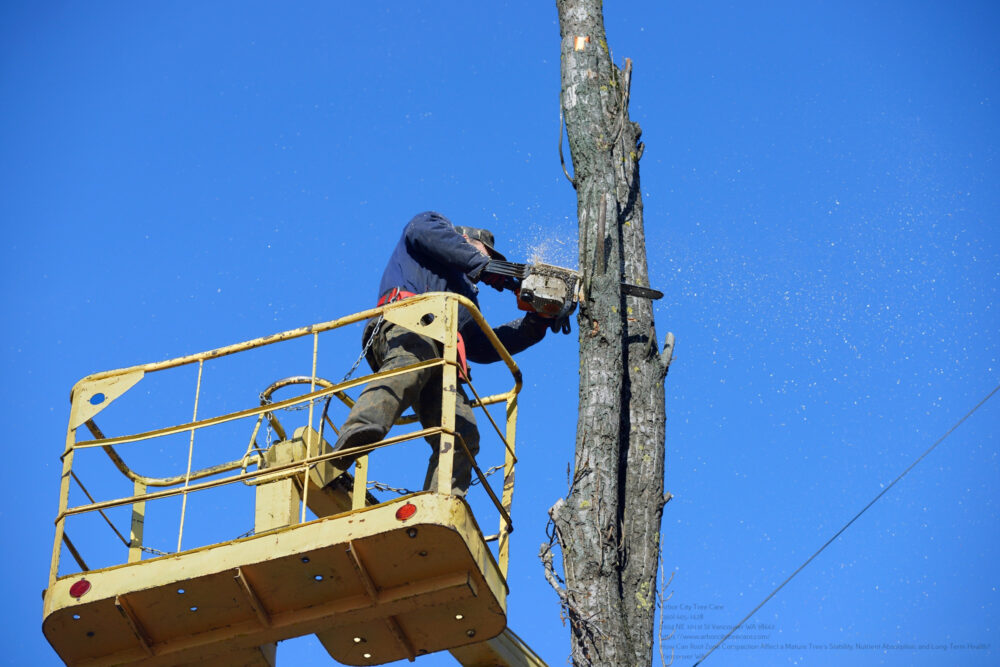
Construction is a common cause of mature trees developing compacted root zones. Excavators, delivery trucks, lifts, stored materials, and repeated worker traffic can place considerable pressure on soil. Driveway extensions, utility trenches, grading, paving, and new tree plantings may also disturb existing roots or change how water drains across a property.
Routine property use can have a cumulative effect. Parking beneath a tree, repeatedly driving lawn equipment over the same ground, or allowing concentrated foot traffic can gradually compress the soil. Wet soil is particularly vulnerable because it can be more easily deformed under pressure. Even when the trunk and visible roots remain untouched, activity farther beneath the canopy can affect the wider root system.
In Clark County, including Vancouver, Battle Ground, and Brush Prairie, mature trees may share limited space with driveways, gardens, buildings, and commercial access areas. Wet seasonal conditions can increase the risk of compaction during outdoor projects, while dense soil may later shed water during drier weather. Washington State University Extension explains how soil compaction affects soil structure, water movement, and root development, making it a useful reference for property owners planning work near established trees. Properties in nearby communities across WA and surrounding areas can face similar concerns, although actual soil and drainage conditions vary from site to site.
Are You Concern About Soil Compaction Affecting Your Property?
Contact Arbor City Tree Care to discuss your tree care concerns.
What Warning Signs Suggest the Root Zone is Under Stress?
Compaction-related symptoms often develop gradually and are not exclusive to root problems. Reduced shoot growth, smaller leaves, early leaf drop, thinning foliage, dead twigs, and branch dieback can all occur when roots are under stress. Drought, disease, pests, nutrient deficiencies, and poor drainage can produce similar changes, so these signs should not be treated as proof of compaction.
The soil surface can provide additional clues. Ground that feels unusually hard, sheds water, or retains visible tire tracks may have been subjected to repeated pressure. New cracks around the root plate, exposed roots, a raised section of soil, or a noticeable change in the tree’s lean deserve closer attention. A sudden lean or fresh ground movement after a storm or construction project warrants prompt professional advice, particularly if the tree could affect a home, walkway, road, or neighbors’ property.
The location of potential damage also matters. A tree beside a busy entrance or public path may have people and property within its possible fall area. In contrast, a tree in an open part of a large property may present a different level of exposure. The presence of hazardous branches should also be considered separately from root stability because canopy defects and root problems require different assessments.
Why Pruning and Removal Decisions Need Different Considerations
Tree pruning does not reverse soil compaction, but it may form part of a broader management plan when the canopy has dead, damaged, or poorly attached branches. Common reasons for pruning include removing hazardous branches, addressing structural defects, reducing selected limbs, and maintaining clearance. Structural pruning, reduction pruning, and specimen shaping each serve different purposes, so the method should match the tree’s condition and intended outcome.
Expert tree pruning services should preserve the tree’s natural form wherever practical. Excessive crown reduction can remove too much foliage and create additional stress, particularly when roots are already struggling. Hedge Pruning is a separate landscape task and should not be confused with work intended to address a mature tree’s root-zone condition. Likewise, routine tree removal, stump removal, and stump grinding do not correct compaction around a neighboring tree.
Removal services may be considered if an assessment identifies serious structural problems that cannot be managed safely by other measures. That decision should account for the tree’s condition, its location, potential consequences of failure, and available management options. A stump grinder is used after a tree has been removed to grind the remaining stump; it does not restore the root system of a nearby mature tree. Where removal is necessary, the appropriate approach should prioritize safety, minimal disruption, and protection of surrounding landscape features.
Choosing a Tree Service With the Right Focus
Property owners comparing providers should look beyond broad promises of a reliable service or an unbeatable customer experience. A useful discussion should cover the tree’s symptoms, site history, potential risks, and the reasoning behind any proposed work. A family-owned and operated business, a larger tree service contractor, or a landscaping company may offer different capabilities. Still, professional experience and the quality of safety practices should remain central considerations.
Pricing arrangements can vary according to the scope of work, equipment, access, tree size, and disposal requirements. Some providers may discuss full-day rates for larger projects, while smaller jobs may be priced differently. Property owners should request a clear description of the proposed work and any additional charges rather than assuming every quote covers the same tasks. Budgetary constraints are worth discussing, but reducing the scope of necessary safety work without understanding the consequences can create problems later.
Supporting Long-Term Tree Health After Compaction
Recovery depends on how much of the root system remains functional and whether the underlying site conditions can be improved. Keeping vehicles away, preventing repeated foot traffic, maintaining appropriate mulch, and avoiding unnecessary digging can give roots better conditions for continued growth. Irrigation may need adjustment if water runs off compacted soil, but watering frequency should reflect soil moisture and species needs rather than a fixed schedule.
Long-term observation can reveal whether the tree is stabilizing or continuing to decline. Changes in crown density, leaf size, shoot growth, and deadwood provide useful context when considered over multiple growing seasons. A record of construction, drainage changes, pruning, and visible symptoms can also help a professional interpret the tree’s history.
For property owners seeking tree service in Vancouver WA, Arbor City Tree Care is a local point of contact for discussing tree-related concerns and appropriate next steps. The company can be contacted through its online contact form to discuss the situation and determine whether a tree service visit is appropriate. Protecting the root zone before damage accumulates remains one of the most practical ways to support a mature tree’s stability and long-term health.
Are You Concern About Soil Compaction Affecting Your Property?
Contact Arbor City Tree Care to discuss your tree care concerns.
FAQs About Tree Service in Vancouver WA
[new_accordion title="Is pruning a suitable alternative to removing a tree with root damage?"]Pruning may address certain canopy defects, but it cannot replace lost roots or repair compacted soil. Whether the tree can remain depends on its overall condition, structural stability, and the consequences of potential failure. Removal is one option when risks cannot be managed acceptably, but compaction alone does not make removal inevitable.