Why a Small Tree Defect Can Become a Much Bigger Problem
A tree rarely moves from completely healthy to structurally dangerous in a single moment. More often, a small defect, wound, cavity, weak branch union, or area of decay gradually changes how forces move through the tree. For property owners seeking an arborist in Clark County WA, understanding those changes can help identify structural concerns before they develop into major failures.
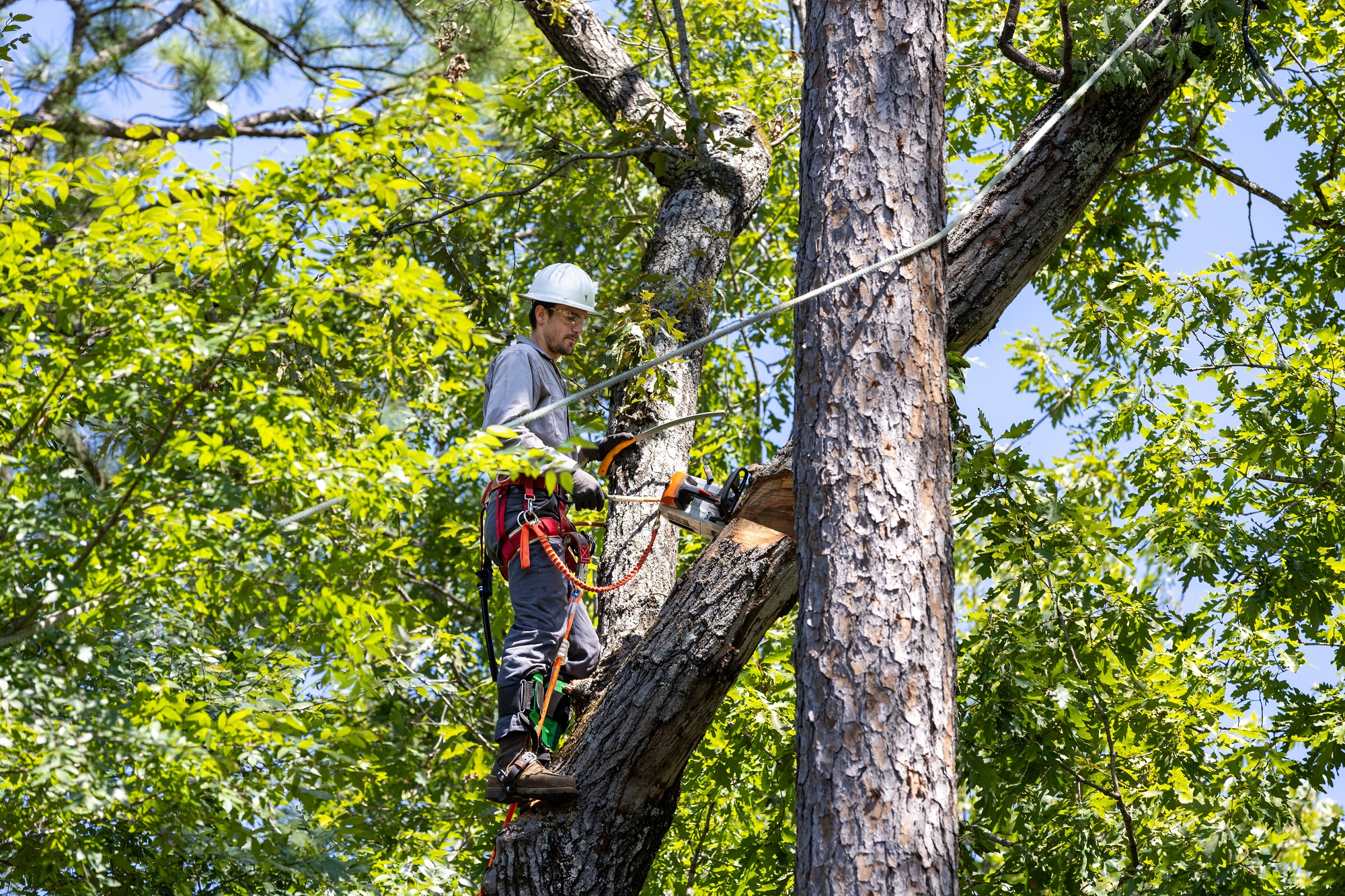
Arbor City Tree Care approaches tree care with this broader view, combining arborists’ knowledge, inspections, pruning, and removal when a tree’s condition warrants professional intervention. A professional arborist evaluates how a defect affects the surrounding wood, branches, trunk, roots, and canopy, rather than examining a single damaged area in isolation.
By considering the location and progression of defects, tree structure, species, site conditions, and potential targets beneath the canopy, an arborist can determine whether monitoring, tree pruning, structural pruning, support, or tree removal is appropriate. This approach helps manage safety risks while preserving trees whenever reasonable.
What Does an Arborist in Clark County, WA Risk Evaluation Actually Look For?
Tree-defect propagation analysis is essentially the process of understanding how an existing weakness may influence the surrounding structure over time. A crack can extend, decay can reduce sound wood, a damaged branch union can become increasingly unstable, or repeated stress can cause a localized problem to affect a larger section of the tree. The International Society of Arboriculture’s current tree risk assessment guidance considers factors including defects, targets, likelihood of failure, and consequences when evaluating tree risk.
For an arborist in Clark County WA, this means looking beyond what is immediately visible. The inspection may consider tree species, trunk condition, branch attachments, previous tree pruning, root-zone disturbance, soil conditions, storm history, pest activity, and the position of buildings, driveways, sidewalks, power lines, or other targets. Why does that matter? A defect in an isolated portion of a mature tree isn’t necessarily equivalent to the same defect above a home or busy area.
Clark County includes established communities such as Battle Ground, Brush Prairie, La Center, and Salmon Creek, where mature trees often coexist with homes, streets, utilities, and landscaped properties. In the Pacific Northwest, species such as Douglas firs and western red cedars can reach substantial sizes, making professional evaluation especially important when structural defects appear.
5 Mistakes that Can Hide a Developing Tree Failure
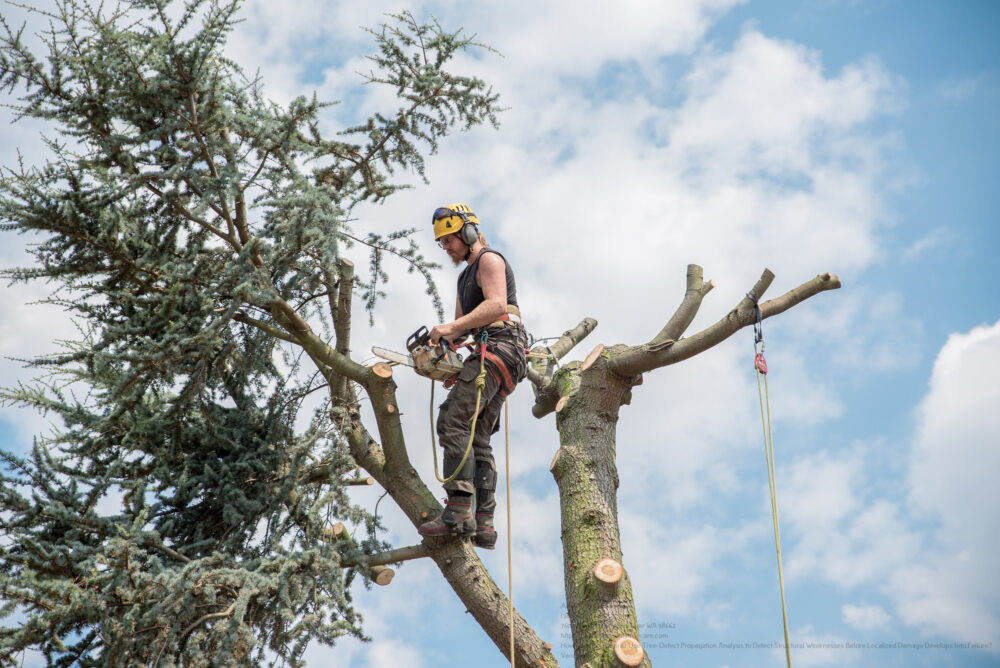
- One common mistake is judging a tree entirely by its leaves. A tree can maintain a healthy-looking canopy while developing decay, weak attachments, or internal structural problems. Conversely, thinning foliage doesn’t automatically mean removal is necessary. An arborist considers the entire tree before recommending a course of action.
- Another mistake is treating every crack or cavity as proof that a tree must come down immediately. Defects vary in location, size, severity, and effect on structural integrity. The USDA Forest Service notes that defects can indicate areas of weakness and that the risk associated with a defect can change over time, which is why systematic inspection and monitoring matter.
- A third problem is ignoring the tree’s surroundings. A branch failure over an unused section of a large property presents a different risk from a similar failure above a home, driveway, playground, or utility corridor.
- A fourth mistake involves assuming previous tree trimming automatically made a mature tree safer. Poor pruning can create wounds, alter branch structure, or stimulate weakly attached growth. Proper pruning practices should account for the tree’s species, structure, condition, and long-term maintenance needs rather than simply removing as much material as possible.
- Finally, some property owners delay seeking professional help due to budgetary constraints. Delaying an inspection can allow a manageable concern to progress, particularly after storm damage or visible structural change.
Arbor City Tree Care provides tree services, including inspections, tree trimming, tree pruning, tree removal, and emergency tree service so that recommendations can be matched to the property’s actual condition.
Need Professional Arborist Services?
Contact Arbor City Tree Care today for trusted tree care and expert guidance.
How Early Detection Changes What Can Be Done With a Mature Tree
Early identification of structural weakness can create more management options. When a developing defect is identified before extensive failure occurs, an arborist may recommend selective tree pruning, tree thinning, structural pruning, tree cabling and bracing, or continued monitoring instead of immediate removal. The appropriate solution depends on the tree and its surrounding risk.
This is where an arborist in Clark County WA can provide value beyond routine maintenance. Instead of treating every symptom separately, the arborist can consider how defects interact with one another. A cavity combined with a heavy limb, for example, may deserve closer attention than either condition considered alone.
Arbor City Tree Care works with residential and commercial property owners and specializes in close-quarter tree work around structures. Its services include tree care, tree trimming, tree pruning services, tree removal, stump grinding, and emergency services. The company also offers structural support options such as tree cabling and bracing and lightning protection system installation when appropriate.
The goal isn’t simply to remove hazardous trees. In many situations, the better outcome may be to preserve a mature tree while addressing specific structural concerns. That can protect the property’s landscape character and avoid unnecessary removal while still addressing safety concerns.
Why Local Conditions Can Change the Meaning of a Tree Defect
A defect doesn’t exist in a vacuum. Its significance depends partly on the environment surrounding the tree. A mature Douglas fir standing over an open portion of a large lot has a different risk profile from one positioned beside a residence, driveway, or power system. The same principle applies to western red cedars and mature Maple trees throughout Clark County.
Storm cleanup provides another useful example. After high winds, a property owner may notice broken branches, hanging limbs, exposed roots, or cracks that weren’t visible previously. Attempting to diagnose or cut damaged material without professional help can create additional movement and instability. Arbor City Tree Care provides emergency tree services for situations involving fallen trees, damaged limbs, and other urgent hazards.
Local requirements can also affect planned tree work. Property owners may need to consider applicable zoning standards, protected trees, site conditions, or other local requirements before beginning significant work. When a tree is part of a larger landscape services plan or a land-clearing project, professional evaluation can help coordinate the work with the property’s broader needs.
The practical lesson is simple: a structural defect should be evaluated in context. What does the tree look like, where is the defect, what surrounds it, and what happens if that portion fails?
Why Arbor City Tree Care is a Practical Choice for Structural Tree Concerns
We at Arbor City Tree Care provide professional solutions tailored to the specific conditions of each customer’s trees and property. Our arborist services focus on understanding structural concerns before recommending the appropriate tree care, trimming, pruning, or removal solution.
We also provide close-quarter tree work, emergency tree services, and long-term maintenance options for residential and commercial properties throughout Clark County. Our ISA-certified arborist experience and local knowledge help customers understand their tree’s condition rather than making decisions based solely on visible symptoms.
When a tree develops a defect, early professional evaluation can clarify the next steps and help protect people, property, and the surrounding landscape. Contact Arbor City Tree Care for professional arborist assistance and tree care in Clark County, WA, and get a clearer plan for managing structural concerns with an arborist in Clark County WA.
Need Professional Arborist Services?
Contact Arbor City Tree Care today for trusted tree care and expert guidance.